Development Based on Internal Consumption Capacity
The DCCI Framework is an “inside-out” paradigm for African development: sustainable maturation happens when citizens have the purchasing power to consume what their own domestic industrial base produces — not through raw-material extraction or external aid alone.
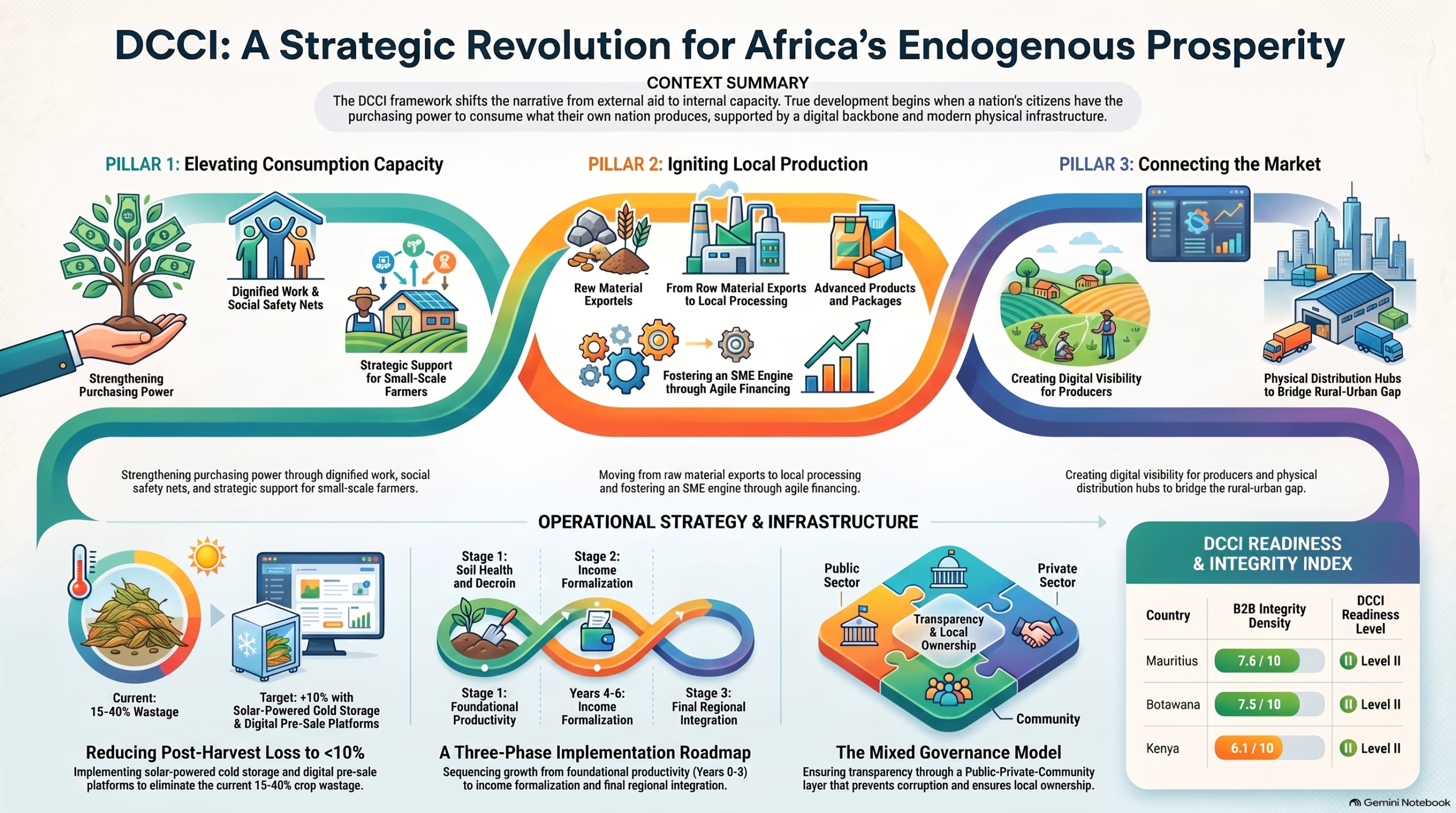
How the DCCI Framework Works
Most development models treat Africa as a source of raw materials or a recipient of aid. The DCCI Framework, developed by ProdAfrica Consulting, proposes a different sequence: build internal consumption and production strength first, then use that domestic foundation to engage global markets — rather than the reverse.
The framework rests on three inseparable pillars, implemented in a phased sequence designed to preserve macroeconomic stability and avoid imported inflation.
The Three Pillars of the DCCI Framework
Elevating Consumption Capacity
Moving citizens from precarity to active economic participation: dignified work and fair minimum wages, expanded social security and access to education and healthcare, and technical assistance and credit for small-scale farmers.
Igniting Local Production
Fostering SMEs through simplified bureaucracy and agile financing, shifting from raw-material exports to value-added processing (cocoa to chocolate, cotton to textiles), and competitive import substitution.
Connecting the Market
Bridging rural producers and urban consumers through centralized wholesale logistics (a Mercabarna-inspired model), digital visibility via platforms like the ProdAfrica Business Directory, and investment in roads, rail, and cold-chain infrastructure.
Phased Implementation
Foundational Productivity
Reduce post-harvest losses, deploy digital agricultural information, and increase the tax-to-GDP ratio by 4–7 percentage points.
Income Growth & Formalization
Selective real wage increases in sectors with proven productivity gains, and expanded targeted social protection.
Consolidation & Integration
Support manufactured exports to regional partners and leverage the African Continental Free Trade Area (AfCFTA).
Botswana: A Local Market Revolution
Botswana shows a paradox: strong macroeconomic fundamentals — a stable currency and low risk ratings — alongside an underdeveloped internal market and significant post-harvest losses.
Applying the DCCI Framework to Botswana reveals an adapted Mercabarna model: primary wholesale markets in Gaborone and Francistown with full cold-chain and digital infrastructure, secondary markets in Maun, Serowe, and Kasane connecting rural producers without requiring travel to the capital, and a three-layer logistics solution — rural aggregation points with solar-powered cold storage, shared transport corridors on fixed routes, and digital pre-sale integration that eliminates unsold-stock risk. A mixed public-private-community governance model keeps the system transparent and resistant to political capture.
Kenya: The Industrial Agri-Food Powerhouse
Kenya leads the region in digital finance but its physical supply chain remains, in practice, decades behind. Under the DCCI Framework, Kenya’s path forward is a decentralized “County-Hub” model: five Regional Wholesale Hubs — Nairobi for high-speed wholesale and ready-to-eat processing, the Rift Valley for dairy and grain, Mount Kenya for high-value horticulture aimed at EU-trade readiness, and Kisumu as the logistics gateway to the Great Lakes region.
It also leverages Kenya’s fintech maturity through Financial Trust Nodes: smart-warehouse receipts issued via M-Pesa for cold-storage deposits, usable as collateral for seed and fertilizer micro-loans, with USSD-based settlement ensuring inclusion for smallholders without internet access.
Sovereign Intelligence & Global Integration
Sovereign AI
Localized predictive-demand systems and proximity data centers reduce dependency on foreign-hosted cloud infrastructure and tackle the structural leaks — 30% to 40% of staple crops lost post-harvest.
AfCFTA as Multiplier
The African Continental Free Trade Area scales the market to 1.4 billion consumers, enabling the industrial deepening no single national market can sustain alone.
EU-Africa Partnership
A shift from extraction and aid to a relationship of equals under the Global Gateway initiative: Europe provides the investment “road,” while the DCCI Framework provides the “map” that routes it to verified producers.
See the DCCI Framework Applied Across 54 Countries
Explore live ratings, sovereign trade compliance, and market integrity scores in the ProdAfrica B2B Index.
Explore Live Ratings →